Study: Frank Zappa
06/2016
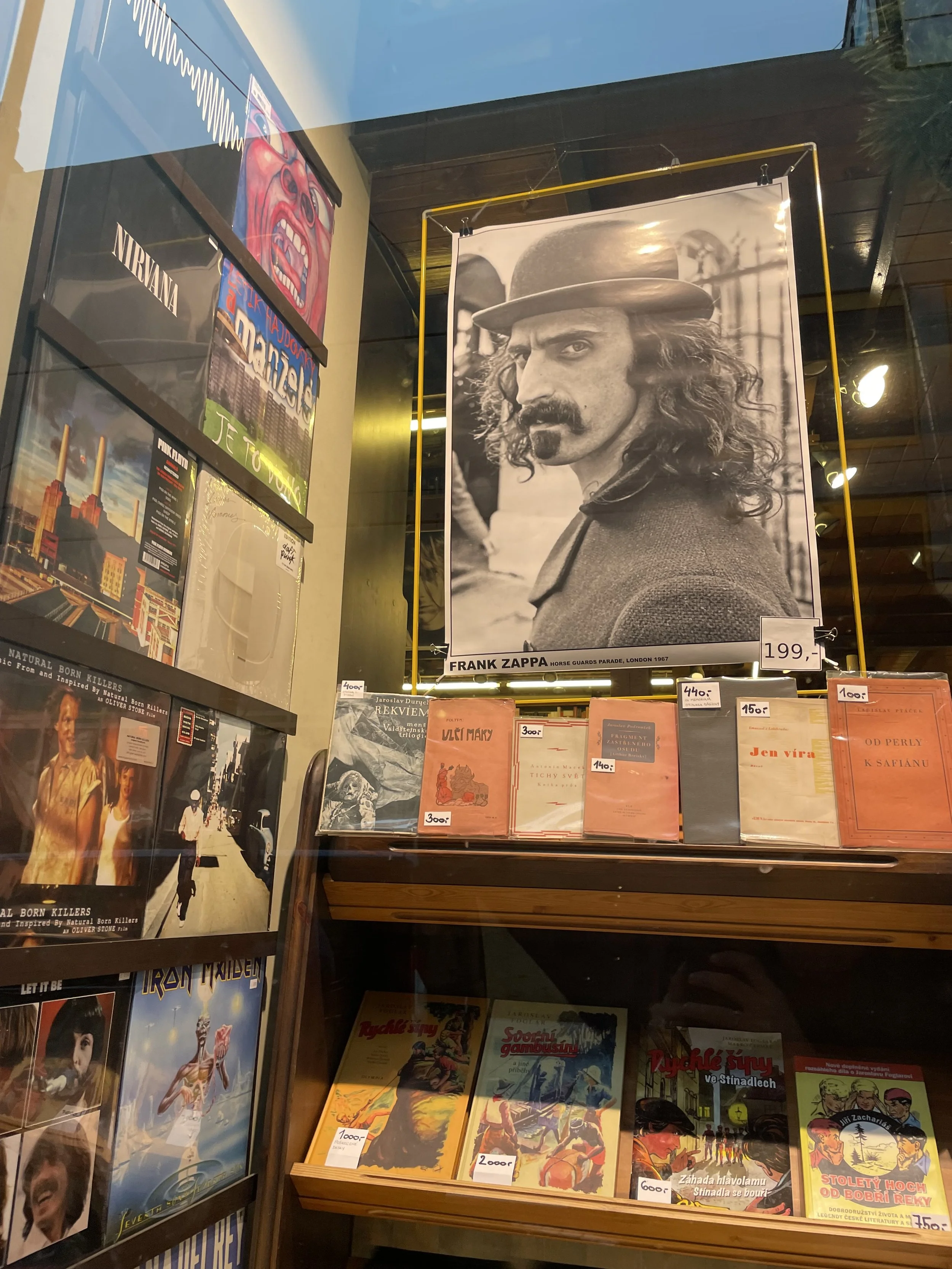
On Zappa
Notes toward a way of working
What I keep returning to with Zappa is not any single thing he made but the sheer fact of the making — the relentlessness of it, the refusal to treat any one project as finished or definitive, the sense that the work was always in conversation with itself across time. He kept returning to earlier material, rerecording it, reassigning it to different ensembles, pulling threads from one context and dropping them into another entirely. Nothing was sacred and nothing was abandoned. The catalogue was not a body of work so much as a single ongoing process that happened to be released in installments.
He was also genuinely uninterested in the boundaries between categories — not as a theoretical position but as a practical one. The question was never what genre this belonged to but whether it was doing something interesting, whether the material had somewhere to go. I find that useful as a way of thinking about sculpture and 2d art together, about found or made objects alongside abstraction and figuration, about process that refuses to settle into a single mode. The work is not trying to reconcile these things. It is simply not convinced that the distinctions matter as much as the making does.
There is something in his relationship to the studio — understood as a total environment, a place where everything was simultaneously in progress — that resonates with how I think about the practice. Materials accumulate. Things that were part of one work become available for the next. The process does not have a clean beginning or end; it has phases, densities, moments of synthesis and moments of dispersal. Zappa worked this way because he seems to have genuinely believed that the making itself was the point — not the finished object delivered to an audience, but the continuous act of organizing sound, of finding out what happened when you put this next to that.
He was also funny in a way that did not undermine the seriousness of what he was doing but was inseparable from it. I think about this because there is a tendency in art discourse to treat difficulty and humor as opposites, to assume that if something makes you laugh it cannot also be pressing on something real. Zappa never accepted that. The absurdity was load-bearing. The joke was also the argument. I am not sure my work is funny exactly, but I recognize that instinct.
What Zappa modeled, more than anything, was a kind of sovereign indifference to what the work was supposed to be. Not indifference to quality — he was obsessive about that — but indifference to expectation, to category, to the idea that you had to choose between rigorous and playful, between high and low, between finished and perpetually in revision. The practice was its own permission structure. That is the thing worth taking: not the sound, not the style, but the posture — the absolute refusal to ask whether you were allowed.
Free to tape and record and embrace mistakes and otherwise erased “failures”. The explosion that was once the link between him and the Czech people in 1989-90, after the fall of the Soviet influence in 1989, Zappa became a symbol of freedom and free speech. I found Zappa’s process in his studio and life, more interesting sometimes than the result of his actions. I followed his lead (in spirit and mentorship) from 2014-16 while in graduate school, via creative process and mashing up of mediums and making. All the work was named after songs, devoted to Zappa.
When in Prague, I always see posters, his creative influence still lives, although he is no longer with us.
O Zappovi Poznámky ke způsobu práce
To, k čemu se u Zappy stále vracím, není žádná jednotlivá věc, kterou vytvořil, ale samotný fakt tvorby – jeho neúnavnost, odmítání považovat jakýkoli projekt za dokončený nebo definitivní, pocit, že dílo bylo vždy v rozhovoru samo se sebou napříč časem. Neustále se vracel k dřívějšímu materiálu, znovu ho nahrával, přiřazoval různým souborům, vytahoval nitě z jednoho kontextu a vhazoval je zcela do jiného. Nic nebylo posvátné a nic nebylo opuštěné. Katalog nebyl ani tak souborem děl, jako spíše jediným probíhajícím procesem, který byl náhodou vydáván po částech. Také se skutečně nezajímal o hranice mezi kategoriemi – ne jako teoretický postoj, ale jako praktický. Otázkou nikdy nebylo, do kterého žánru to patří, ale zda to dělá něco zajímavého, zda má materiál kam jít. To považuji za užitečné jako způsob přemýšlení o sochařství a malířství společně, o nalezených průmyslových objektech vedle abstrakce, o procesu, který se odmítá usadit v jednom módu. Dílo se nesnaží tyto věci sladit. Prostě není přesvědčeno, že na rozdílech záleží stejně jako na samotné tvorbě.
V jeho vztahu k ateliéru – chápanému jako celkové prostředí, místo, kde vše probíhalo současně – je něco, co rezonuje s mým pohledem na tuto praxi. Materiály se hromadí. Věci, které byly součástí jednoho díla, se stávají dostupnými pro další. Proces nemá jasný začátek ani konec; má fáze, hustoty, momenty syntézy a momenty rozptýlení. Zappa pracoval tímto způsobem, protože se zdálo, že skutečně věřil, že smyslem je samotná tvorba – nikoli hotový objekt předaný publiku, ale nepřetržitý akt organizace zvuku, zjišťování, co se stane, když tohle dáte vedle tamtoho. Byl také vtipný – skutečně, strukturálně vtipný – způsobem, který sice neznižoval vážnost toho, co dělal, ale byl od toho neoddělitelný. Přemýšlím o tom, protože v uměleckém diskurzu existuje tendence zacházet s obtížností a humorem jako s protiklady, předpokládat, že pokud vás něco rozesměje, nemůže to zároveň tlačit na něco skutečného. Zappa to nikdy nepřijal. Absurdita byla nosná. Vtip byl zároveň argumentem. Nejsem si jistý, jestli je moje práce úplně vtipná, ale rozpoznávám ten instinkt – ten, který říká, že pokřivený rám zavěšený v podivném úhlu na bílé zdi není jen formální návrh, ale v jistém smyslu i provokace se suchým úsměvem. Zappa modeloval především jakousi suverénní lhostejnost k tomu, co má dílo být. Ne lhostejnost ke kvalitě – tou byl posedlý – ale lhostejnost k očekávání, ke kategorii, k myšlence, že si člověk musí vybrat mezi přísným a hravým, mezi vysokým a nízkým, mezi hotovým a neustálou revizí. Praxe byla svou vlastní strukturou povolení. To je to, co stojí za to si vzít: ne zvuk, ne styl, ale postoj – absolutní odmítnutí zeptat se, zda máte dovoleno.
Svoboda nahrávat a přijímat chyby a jinak smazané „selhání“. Exploze, která kdysi spojovala něj s českým lidem v letech 1989-90, po pádu sovětského vlivu v roce 1989, se Zappa stal symbolem svobody a svobodného projevu. Zappův proces v jeho studiu a životě mi někdy připadal zajímavější než výsledek jeho činů. V letech 2014-16 jsem se během postgraduálního studia řídil jeho vedením (v duchu a mentorství), a to prostřednictvím tvůrčího procesu, kombinování médií a tvorby. Veškerá jeho díla byla pojmenována po písních věnovaných Zappovi. Když jsem v Praze, vždycky vidím plakáty, jeho tvůrčí vliv stále žije, i když už mezi námi není.
