Study: Toyen
06/2022
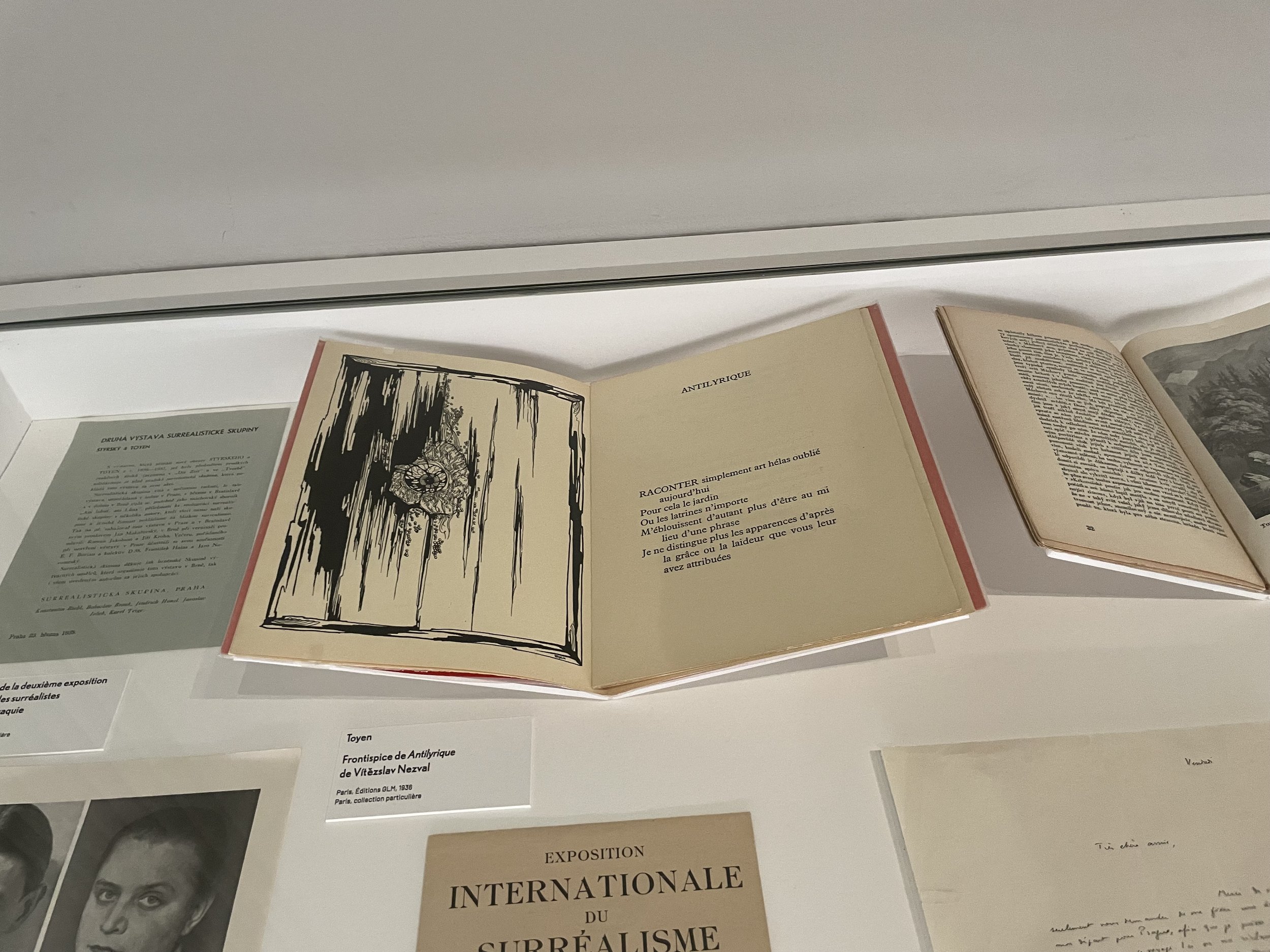
On Toyen
Notes toward a way of working
There is an image in Toyen's work that I keep returning to: a coat standing upright in a barren landscape, empty. No body inside it, no body visible outside it. The garment holds its shape as if the person who wore it simply ceased to exist at the collar. It is one of the most precise images of absence I know — not the absence of something that was never there, but the absence of something that was, and is now gone in a way that refuses to be tidy about it. The coat does not collapse. It stands. That tension — between the structure that remains and the body that has left it — is where a great deal of what interests me in making work actually lives.
Toyen worked consistently in a space between figuration and abstraction — not as a compromise between the two but as a genuine third territory where objects exist in unstable states, where something is almost recognizable and then refuses to fully resolve into recognition. The critic Karel Teige described this as a stage where familiar, strange, and everyday things turn into ghosts. That description resonates with what I am trying to do with materials: take something completely legible — such as a length of institutional pipe — and place it or suspend it just far enough from its context that it becomes strange without becoming meaningless. The object is still itself. But it is also something else now, and the gap between those two states is where the work operates.
Toyen and Štyrský called their early practice Artificialism — an approach that described itself as the identification of the painter with the poet, concerned with poetic perceptions of memory rather than the depiction of visible reality. What strikes me about this is the emphasis on the material surface as a carrier of something that is not optical — not just what the eye receives but what the material holds. Toyen used dripping, spraying through grids, building up layers of paint with physical thickness. The surface was just an object, it was a site — something accumulated and pressured and built up over time. I think about the paint surface on the steel for example, or aqua resin on plaster, in these terms: not a finish applied to an object but a layer of time added to something that already had time inside it.
During the Nazi occupation Toyen was forced underground, unable to exhibit, sheltering Heisler in an apartment while continuing to make work that could not be shown. There is something in this — the practice continuing in the absence of any public — that feels important to me as a way of understanding what making is for. The work was not waiting for an audience. It was doing something that needed to be done regardless of whether anyone would see it. The empty coat stands whether or not anyone is in the room with it. That image of a practice sustained in conditions that actively deny its legitimacy is, I think, one of the more honest descriptions of what the studio actually is.
What I take from Toyen is a particular understanding of the strange object: not surrealism as a style or a set of visual conventions, but the specific discipline of holding an object in a state where it has not yet fully declared itself — where it is still becoming, still oscillating between the familiar and the unknown. The idea that structures can organize absence, or show an event that took place or started it. That, finally, is what the work is doing. Not filling the space. Tracing it.
Reference
Toyen (Marie Čermínová). L'écart absolu. Exhibition catalogue. Musée d'Art Moderne de la Ville de Paris, 2022.
O Toyen
Poznámky k jednomu způsobu práce V Toyenině díle se stále vracím k jednomu obrazu: kabát stojící vzpřímeně v pusté krajině, prázdný. Žádné tělo uvnitř, žádné tělo viditelné vně. Oděv si drží svůj tvar, jako by osoba, která ho nosila, prostě přestala existovat u límce. Je to jeden z nejpřesnějších obrazů absence, které znám – ne absence něčeho, co tam nikdy nebylo, ale absence něčeho, co bylo a nyní je pryč způsobem, který se odmítá chovat uklizeně. Kabát se nehroutí. Stojí. Toto napětí – mezi strukturou, která zůstává, a tělem, které ji opustilo – je místem, kde skutečně žije velká část toho, co mě při tvorbě zajímá. Toyen důsledně pracovala v prostoru mezi figurací a abstrakcí – ne jako kompromis mezi nimi, ale jako skutečné třetí území, kde objekty existují v nestabilních stavech, kde je něco téměř rozpoznatelné a pak se odmítá plně rozpustit v uznání. Kritik Karel Teige to popsal jako fázi, kdy se známé, cizí a každodenní věci mění v duchy. Tento popis rezonuje s tím, co se snažím dělat s průmyslovými materiály: vzít něco zcela čitelného – kus institucionální trubky – a zavěsit to dostatečně daleko od kontextu, aby se to stalo podivným, aniž by to ztratilo smysl. Objekt je stále sám sebou. Ale je to nyní také něco jiného a mezera mezi těmito dvěma stavy je místem, kde dílo funguje.
Toyen a Štyrský nazvali svou ranou praxi artificialismem – přístup, který se popisoval jako ztotožnění malíře s básníkem, zabývající se spíše poetickým vnímáním paměti než zobrazením viditelné reality. Na tom mě zaujal důraz na materiální povrch jako nosič něčeho, co není optické – nejen toho, co oko vnímá, ale i toho, co materiál drží. Toyen používala kapání, stříkání přes mřížky, nanášení vrstev barvy s fyzickou tloušťkou. Povrch byl jen objekt, bylo to místo – něco, co se v průběhu času hromadilo, tlačilo na něj a budovalo. O povrchu barvy na oceli přemýšlím takto: ne jako o povrchové úpravě nanesené na objekt, ale jako o vrstvě času přidané k něčemu, co už v sobě čas mělo.
Během nacistické okupace byla Toyen nucena pracovat v podzemí, nemohla vystavovat, ukrývala Heislera v bytě a zároveň pokračovala v tvorbě děl, která nemohla být vystavena. V tomhle – v praxi pokračující bez jakéhokoli publika – je něco, co mi připadá důležité jako způsob, jak pochopit, k čemu je tvorba. Dílo nečekalo na publikum. Dělalo něco, co bylo třeba udělat, bez ohledu na to, zda to někdo uvidí. Prázdný kabát stojí, ať už je s ním někdo v místnosti, nebo ne. Tento obraz praxe udržované v podmínkách, které aktivně popírají její legitimitu, je podle mého názoru jedním z upřímnějších popisů toho, co ateliér vlastně je. Z Toyen si odnáším specifické chápání podivného objektu: ne surrealismus jako styl nebo soubor vizuálních konvencí, ale specifickou disciplínu držení objektu ve stavu, kdy se ještě plně neprohlásil – kdy se stále stává, stále osciluje mezi známým a neznámým. Nakloněný rám implikuje tělo, které tam už není. Kabát stojí bez svého nositele. Obojí jsou struktury, které organizují absenci, které zpřítomňují chybějící věc tím, že zviditelňují její obrys. To je koneckonců to, co dílo dělá. Nevyplňuje prostor. Obkresluje ho.
