Study: Petr Válek
2/2023
On Válek
Notes toward a way of working
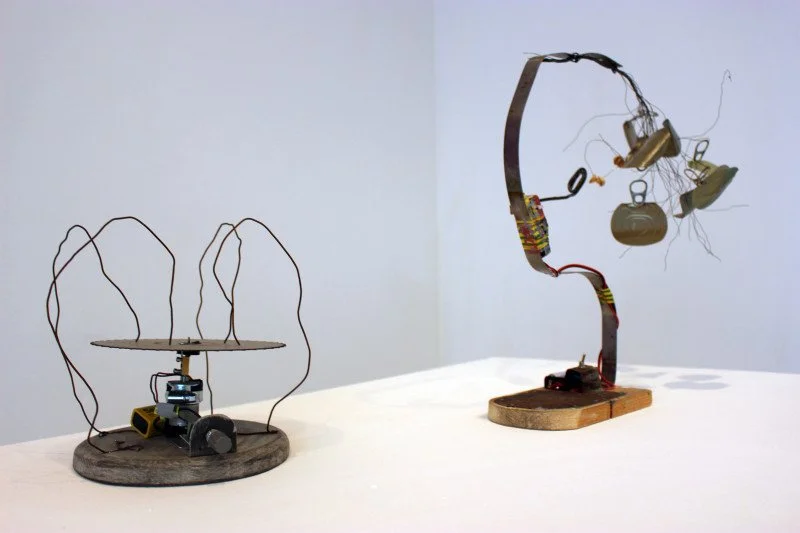
I discovered Petr Válek in 2023 when looking for CZ artists working with kinetic sculpture and sound - his chance sculptures, made of bits and parts, and also now performance interests me.
Petr Válek’s relationship to objects is what interests me most. He takes instruments and devices apart not to repair them but to expose them — to show the inverse side of things, the interior that their designed surface is meant to conceal. Circuit bending, hardware hacking, the rewiring of objects to produce sounds they were never meant to make: this is a practice of inversion. The object that was built to perform a specific function is opened up, its function suspended, and what is revealed is the material logic underneath — the actual wiring, the physical consequence of design decisions that were always there but never meant to be seen. I recognize this instinct.
Válek approaches sound from the perspective of the visual image — and increasingly the two are inseparable in his practice. This crossing of disciplines is not a statement about interdisciplinarity; it is simply how the work thinks. The kinetic objects he builds make noise by moving, by hitting walls, by falling into each other — the sound is a byproduct of form and motion, not the other way around. There is something in this that feels close to how I understand the relationship between sculpture and painting in my own work: not two separate disciplines applied to different objects, but two ways of thinking about the same set of problems — surface, structure, time, the behavior of material under pressure.
His kinetic works produce what he calls stochastic noise — sound generated by collision and chance, by small motors animating objects inside resonant vessels, by the unpredictable consequences of systems set in motion. The result is not random exactly, but it is not controlled either. It is what happens when you build a situation and then let it run. I think about this in relation to the iterative, reconstructive process in the studio — the way materials are built up and then broken down, reassembled, mutated across time. You set the conditions and then you watch what the material does. The work that emerges is yours, but it also exceeds you. That excess is where the interest lives.
What I take from Válek is the image of a practice that has developed entirely on its own terms, in a garden studio in a border town, out of found objects and suspended functions and the patient logic of someone who is more interested in what things reveal when opened than in what they perform when closed. That is a way of working I recognize. The inside of the object is the subject. The inversion is the method. And the isolation — the refusal to explain oneself before the work is ready — is not a limitation. It is a condition of the thinking.
O Válkovi Poznámky k pracovnímu stylu Petra Válka jsem objevil v roce 2023, když jsem hledal české umělce pracující s kinetickou sochou a zvukem – jeho náhodné sochy, vyrobené z kousků a součástek, a nyní i performance mě zajímají. Nejvíce mě zajímá vztah Petra Válka k objektům. Rozebírá nástroje a zařízení ne proto, aby je opravil, ale aby je odhalil – aby ukázal inverzní stránku věcí, vnitřek, který má jejich navržený povrch skrývat. Ohýbání obvodů, hackování hardwaru, přepojování objektů tak, aby produkovaly zvuky, které nikdy neměly vydávat: to je praxe inverze. Objekt, který byl postaven k plnění specifické funkce, je otevřen, jeho funkce pozastavena a odhalena je materiální logika pod ním – skutečné zapojení, fyzický důsledek designových rozhodnutí, která vždycky byla, ale nikdy neměla být vidět. Tento instinkt rozpoznávám. Válek přistupuje ke zvuku z perspektivy vizuálního obrazu – a tyto dvě věci jsou v jeho praxi stále více neoddělitelné. Toto křížení disciplín není prohlášením o interdisciplinaritě; je to prostě způsob, jakým dílo myslí. Kinetické objekty, které staví, vydávají hluk pohybem, nárazy do zdí, pády do sebe – zvuk je vedlejším produktem formy a pohybu, ne naopak. V tom je něco, co se blíží tomu, jak chápu vztah mezi sochařstvím a malířstvím ve své vlastní tvorbě: nejde o dvě oddělené disciplíny aplikované na různé objekty, ale o dva způsoby uvažování o stejném souboru problémů – povrch, struktura, čas, chování materiálu pod tlakem.
Jeho kinetická díla produkují to, co nazývá stochastickým šumem – zvuk generovaný srážkami a náhodou, malými motory oživujícími objekty uvnitř rezonančních nádob, nepředvídatelnými důsledky systémů uvedených do pohybu. Výsledek není úplně náhodný, ale ani není kontrolovaný. Je to to, co se stane, když si vytvoříte situaci a pak ji necháte běžet. Přemýšlím o tom ve vztahu k iterativnímu, rekonstrukčnímu procesu v ateliéru – způsobu, jakým se materiály budují a pak rozkládají, znovu sestavují, mutují v průběhu času. Stanovíte si podmínky a pak sledujete, co materiál dělá. Dílo, které vznikne, je vaše, ale také vás přesahuje. V tomto nadbytku žije zájem.

Z Válka si přebírám obraz praxe, která se vyvinula zcela podle vlastních podmínek, v zahradním ateliéru v pohraničním městě, z nalezených objektů a pozastavených funkcí a trpělivé logiky někoho, koho více zajímá, co věci odhalí, když jsou otevřené, než co fungují, když jsou zavřené. To je způsob práce, který poznávám. Vnitřek objektu je subjekt. Inverze je metoda. A izolace – odmítnutí vysvětlovat se dříve, než je dílo hotové – není omezením. Je to podmínka myšlení.
Reference
Válek, Petr. Artist profile. Vašulka Kitchen Brno. vasulkakitchen.org. Accessed 2026.
