Study: Arco
Slegr Family Story 12/2023
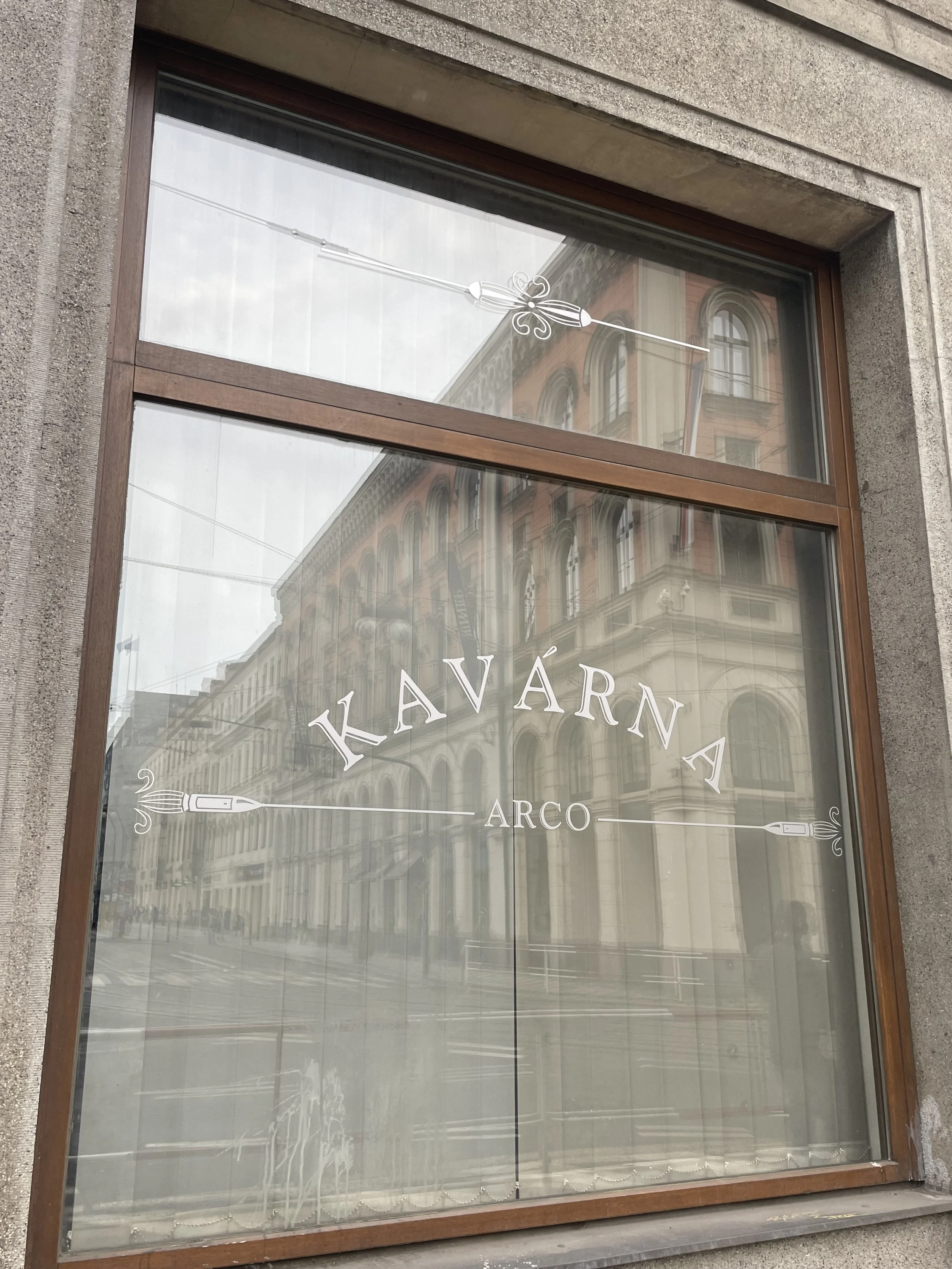
Arco doesn’t look as it once did. In fact, the history on the side of the building isn’t correct, nor is it informative to the rich history it once had. Why, I wonder, does this sight have such a false and strange stigma attached to it?
https://arcoguesthouse.wordpress.com/why-arco/
My Great- Grandfather owned Arco from 1933 - until Nazi occupation.
Sometime later (in 1933) a new proprietor is recorded: Bedřich Havelka became the owner
Arco už nevypadá tak, jak kdysi. Historie na boku budovy ve skutečnosti není správná, ani nevypovídá o bohaté historii, kterou kdysi měla. Proč se k této památke váže takové falešné a podivné stigma?
https://arcoguesthouse.wordpress.com/why-arco/
Můj pradědeček vlastnil Arco od roku 1933 - až do nacistické okupace. O něco později (v roce 1933) je zaznamenán nový majitel: Bedřich Havelka se stal majitelem.
The last clearly recorded private owner of Café Arco was Bedřich Havelka (from 1933). After about 1938 the café ceased to operate in its previous “literary café” form; in the post-war decades it was drastically degraded and eventually came under the administration of the Ministry of the Interior of the Czech Republic, which today runs the premises as a self-service canteen. There is no publicly available, reliably documented chain of private ownership of Café Arco after 1938 - because of the Nazi occupation.
https://cs.wikipedia.org/wiki/Kav%C3%A1rna_Arco?utm_source=chatgpt.com
Posledním jasně doloženým soukromým majitelem kavárny Arco byl Bedřich Havelka (od roku 1933). Přibližně po roce 1938 kavárna přestala fungovat ve své předchozí podobě „literární kavárny“; v poválečných desetiletích drasticky chátrala a nakonec se dostala pod správu Ministerstva vnitra České republiky, které dnes provozuje prostory jako samoobslužnou kantýnu. Neexistuje žádný veřejně dostupný, spolehlivě zdokumentovaný řetězec soukromého vlastnictví kavárny Arco po roce 1938 – kvůli nacistické okupaci.
https://cs.wikipedia.org/wiki/Kav%C3%A1rna_Arco?utm_source=chatgpt.com
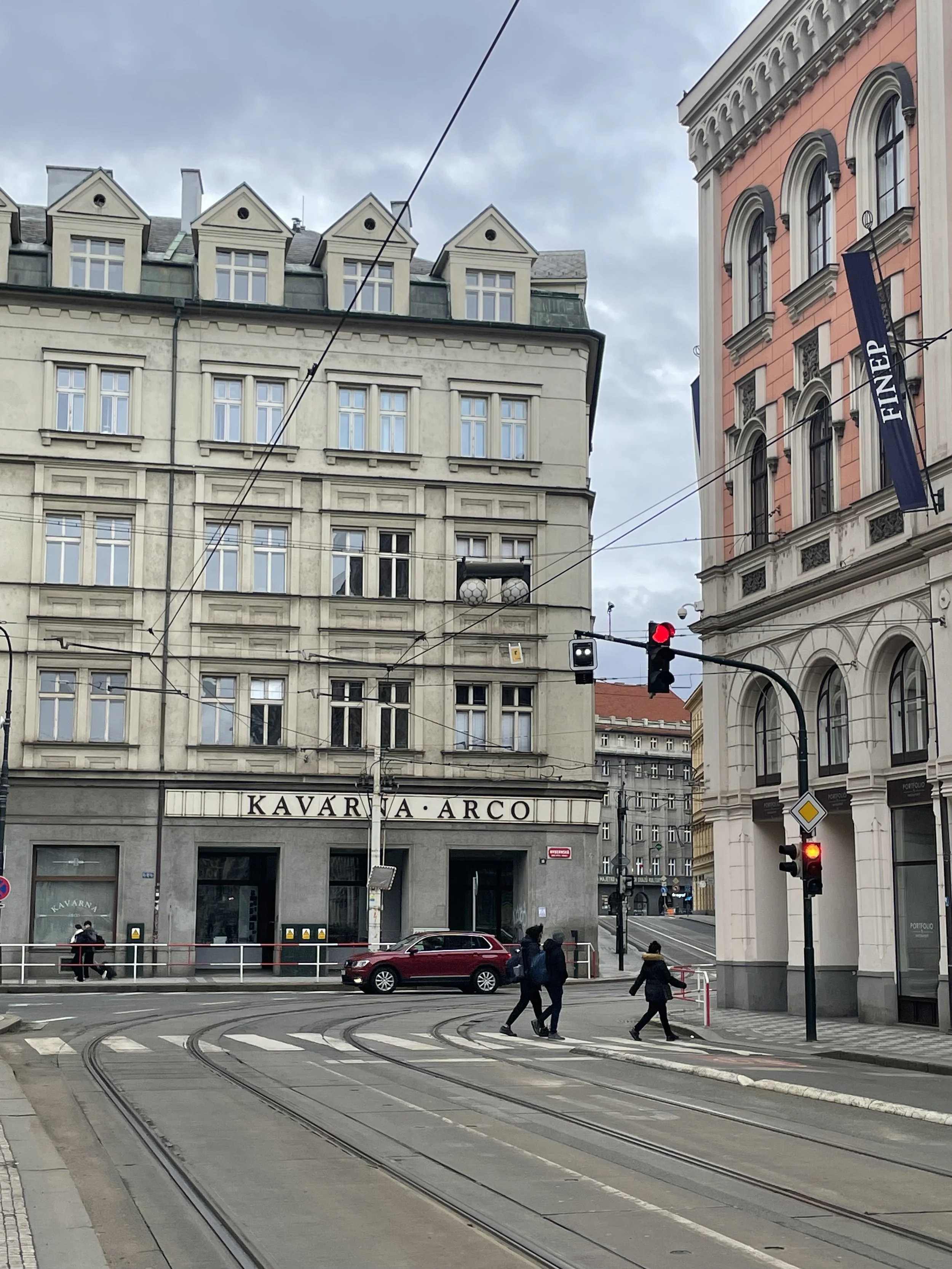
Café Arco, on Hybernská 16 in Prague
This cafe become famous due to the artists, intellectuals or politicians who frequented it.
Many famous German speaking (many Jewish) artists would meet here. The most famous being Franz Kafka. These writers were often referred to as the “Prague Circle”. The café opened in the autumn of 1907, by Josef Suchánek, a coffee-house proprietor. After the end of World War II and the Holocaust with the extermination of Prague's Jewish population, the expulsion of Germans from the city, and then in the years of communism, Arco lost its glamour.
Besides Kafka the Prague Circle included Brod, Werfel, and Johannes Urzidil.
Urzidil even included mention of the café in some of his literature. One of his writings was called House of the Nine Devils and a subset of that was his work "Nacht des Schreckens" ("Night of Terror”). That story has a WWI soldier trying to evade military police and thus disrupting a night at Café Arco.
Kafka developed a relationship with journalist Milena Jesenská, whom he met here.
The owner of the café, Josef Suchánek, ensured peace and order in his business in the form of written rules of conduct for visitors. He called his decree, "Advice and instructions for wartime and post-war "qualitative" nouveau riche and various other immorals". It contained 23 points of rules of proper behavior. One example was that taring articles from newspapers was labeled “vulgar theft”. He even had fines for violating rules.
Various other artists besides writers and important people met here. It is said that even Albert Einstein visited.
The café building is located across from Masaryk Railway Station and is now a self-serve canteen. It no longer has the charm of the past.
Kavárna Arco, Hybernská 16 v Praze
Tato kavárna se proslavila díky umělcům, intelektuálům nebo politikům, kteří ji navštěvovali.
Scházelo se zde mnoho slavných německy mluvících (mnoho židovských) umělců. Nejznámějším byl Franz Kafka. Tito spisovatelé byli často označováni jako „Pražský kruh“. Kavárnu otevřel na podzim roku 1907 Josef Suchánek, majitel kavárny. Po skončení druhé světové války a holocaustu s vyhlazením pražského židovského obyvatelstva, vyhnáním Němců z města a poté v letech komunismu ztratilo Arco svůj lesk.
Kromě Kafky se do Pražského kruhu zařadili Brod, Werfel a Johannes Urzidil.
Urzidil dokonce zmínil kavárnu v některých svých literárních dílech. Jeden z jeho spisů se jmenoval Dům devíti ďáblů a jeho součástí bylo jeho dílo „Nacht des Schreckens“ („Noc hrůzy“). V tomto příběhu se voják z první světové války snaží uniknout vojenské policii a tím naruší večer v kavárně Arco.
Kafka si vytvořil vztah s novinářkou Milenou Jesenskou, se kterou se zde setkal.
Majitel kavárny Josef Suchánek zajišťoval klid a pořádek ve svém podniku formou písemných pravidel chování pro návštěvníky. Svůj dekret nazval „Rady a pokyny pro válečné a poválečné „kvalitativní“ zbohatlíky a různé jiné nemorálky“. Obsahoval 23 bodů pravidel slušného chování. Jedním z příkladů bylo, že tarování článků z novin bylo označeno za „vulgární krádež“. Za porušení pravidel dokonce uděloval pokuty.
Scházeli se zde i různí další umělci kromě spisovatelů a významných osobností. Říká se, že sem zavítal i Albert Einstein.
Budova kavárny se nachází naproti Masarykovu nádraží a nyní je samoobslužnou kantýnou. Už nemá kouzlo minulosti.
